
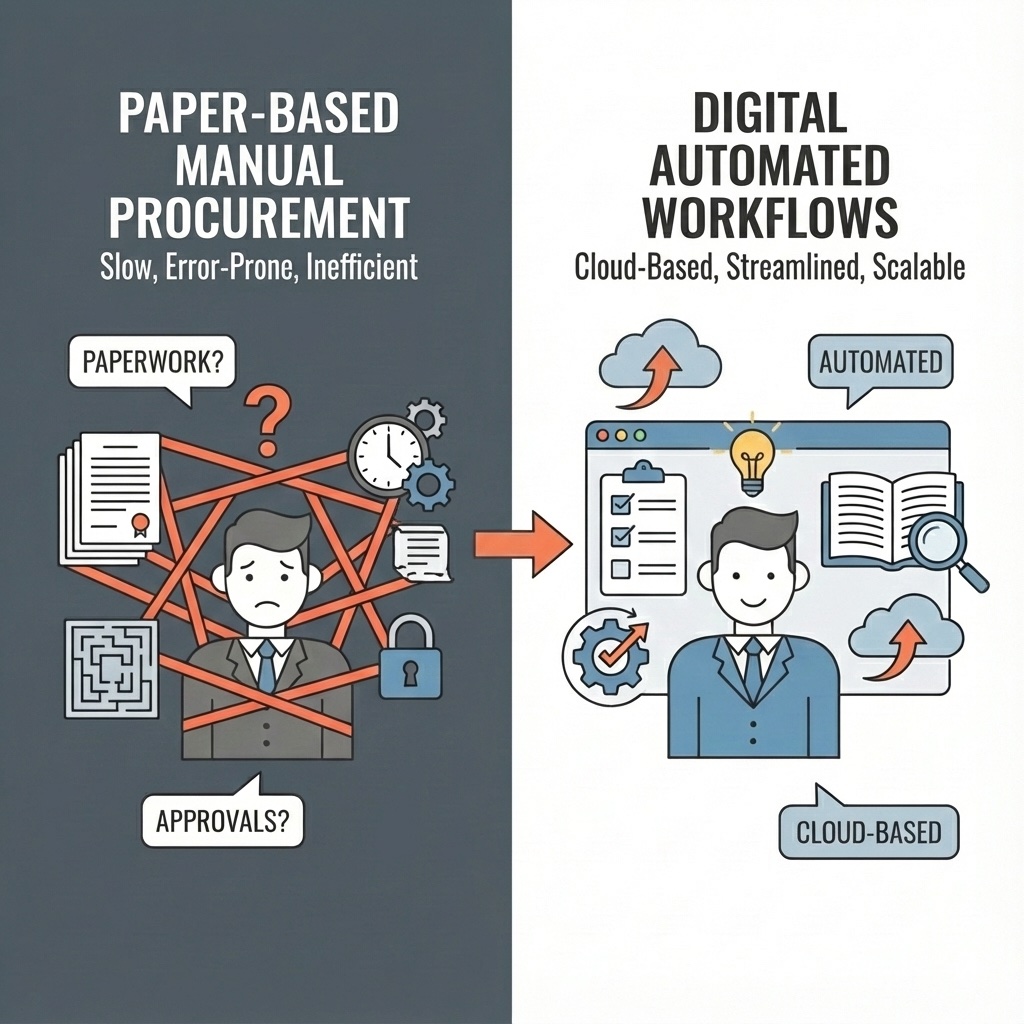
Why Organizations Are Digitizing Procurement
Growing cost pressures, supply chain disruptions, regulatory demands, and rising expectations for transparency are pushing organizations to modernize their procurement processes. In a 2025 Gartner survey, 72% of chief procurement officers named data and analytics technologies a top priority, and 68% named AI and generative AI. For the AI-era version of this roadmap, from data readiness to working agents, see AI transformation in procurement. A short answer version is in where to start digital transformation in procurement.
This guide sets out a practical roadmap for organizations starting digital procurement and shows where AI-powered tools like Buyer24 can speed up the work. It pairs with our broader guide to AI in procurement, which maps where AI fits across the sourcing lifecycle.
What Digital Procurement Means
Digital procurement is the use of technology to optimize purchasing, supplier management, and supply chain operations. It replaces manual procedures with technology-based workflows.
Key characteristics include:
- Automation of repetitive tasks
- Standardization of processes across the organization
- Real-time visibility into spending and supplier performance
- Data-driven decision making based on analytics
- Integration across systems and departments
Together these improve efficiency and transparency and reduce costs.
Benefits of Digital Procurement
Breaking Down Silos
Digital transformation breaks down departmental silos by creating a single source of truth. Organizations gain real-time insights into spending patterns across every department through unified platforms.
With Buyer24, all your RFQ communications, supplier responses, and quote comparisons live in one place, which replaces scattered email threads and disconnected spreadsheets.
More Time for Strategic Work
Automation handles repetitive tasks that once consumed entire teams, freeing procurement professionals to focus on:
- Strategic supplier relationships
- Opportunities to add value
- Risk management
- Innovation and improvement
Improving Decision Speed
With better visibility, teams make smarter decisions faster, reduce cycle times, and improve compliance. Procurement leaders see this as the main benefit of generative AI. They cite better decision-making as the top source of value, at 67.7%, ahead of productivity gains at 49.4% (Deloitte 2025 Global CPO Survey).
Key Technologies
AI-Powered Procurement Agents
The newest development in procurement technology is AI agents that can handle routine sourcing tasks autonomously. Gartner projects agentic AI in supply chain and procurement will grow from $2 billion in 2025 to $53 billion by 2030 (Gartner, 2025). For the broader shift, see how AI is transforming procurement automation. These systems can:
- Monitor incoming emails and automatically identify RFQ requests
- Extract requirements from unstructured documents and emails
- Generate and send RFQs to qualified suppliers
- Collect and normalize quotes for easy comparison
- Translate communications for global supplier networks
Buyer24's AI agent does this around the clock. It processes requests, communicates with suppliers, and organizes quotes while you focus on strategic decisions. Extended to all routine work, this becomes the basis of touchless procurement, where routine requests flow through with minimal human handling.
E-Procurement Platforms
E-procurement platforms are core systems that digitize the source-to-pay process:
- Requisition management
- RFQ/RFP automation
- Purchase order processing
- Invoice management
- Spend analytics
Artificial Intelligence and Machine Learning
AI capabilities include:
- Intelligent supplier matching
- Automated quote analysis and extraction
- Spend categorization
- Risk prediction
- Multi-language communication
Cloud-Based Solutions
Modern cloud platforms offer:
- Rapid deployment
- Lower upfront costs
- Automatic updates
- Scalability
- Remote access
These benefits apply across industries, but each sector has its own constraints. Agencies modernizing under tight regulatory rules, for example, can review the specific obstacles in navigating public sector procurement challenges. Smaller organizations have an advantage because they have no legacy stack to unwind and can deploy modern tools in weeks, as covered in the small-business case for AI procurement.
Common Challenges to Anticipate
Resistance to Change
People naturally resist changing established ways of working. Address this through:
- Clear communication about benefits
- Involvement in the change process
- Training and support
- Quick wins that demonstrate value
The best procurement tools feel like a natural extension of existing workflows. Buyer24 integrates with your email, so your team keeps working the way it always has while AI handles the tedious parts.
Integration with Legacy Systems
Connecting new technologies with existing systems can be challenging. Rather than ripping out your core platforms, consider the AI layer your procurement stack is missing, which adds automation in front of the tools you already run. Look for solutions that:
- Work with your existing email (Gmail, Outlook)
- Don't require massive IT projects
- Provide immediate value without complex setup
- Can scale as your needs grow
Data Quality Issues
Digital systems depend on the quality of the data they use, and data quality is the most underestimated obstacle in procurement transformation. Gartner (2025) found that 74% of procurement leaders say their data isn't AI-ready, so breaking down data silos, standardizing inconsistent formats, replacing missing or outdated information, and putting ongoing data governance in place should come early in any roadmap. Our guide to procurement data readiness covers which records to fix first and how much you need before starting.
AI-powered tools can help here too. Buyer24 automatically extracts and structures data from emails and documents, turning unstructured information into organized, searchable records.
Skill Gaps
Teams may lack digital skills. Invest in:
- Training programs
- External expertise
- Phased implementation
- User-friendly tools
Budget Constraints
Upfront technology investments can be difficult to justify. Focus on:
- Clear ROI projections
- Phased approaches
- Quick wins that fund further investment
- Total cost of ownership, beyond the purchase price
Where to Start: 9 Steps
Step 1: Assess Your Current State
Start by documenting how procurement works today:
- Map current processes end-to-end
- Identify pain points and inefficiencies
- Document manual work and workarounds
- Assess technology currently in use
- Gather stakeholder perspectives
Step 2: Define Your Vision
Set clear goals:
- What problems are you solving?
- What capabilities do you need?
- What outcomes matter most?
- How will you measure success?
Step 3: Prioritize Opportunities
You can't transform everything at once. Prioritize based on:
- Impact on the organization
- Ease of implementation
- Resource requirements
- Dependencies and sequencing
For most organizations, RFQ management is the ideal starting point because it's high-volume, time-consuming, and delivers immediate measurable improvements.
Step 4: Build the Business Case
Secure support and resources by demonstrating value:
- Quantify current costs and inefficiencies
- Project benefits of transformation
- Calculate ROI and payback period
- Address risks and mitigation strategies
Step 5: Select Technology Partners
Choose solutions that fit your needs. The key criteria, covered in our guide to how to choose procurement software, are:
- Integration with existing systems
- Scalability for future growth
- Vendor stability and support
- User experience and adoption
- Total cost of ownership
Step 6: Plan the Implementation
Create a realistic roadmap:
- Phased approach with clear milestones
- Resource allocation and responsibilities
- Change management activities
- Training and communication plans
- Risk management and contingencies
Step 7: Execute with Change Management
Implementation success depends on people:
- Communicate consistently throughout
- Train users before and after go-live
- Provide support resources
- Address concerns promptly
- Celebrate successes
Step 8: Measure and Optimize
Track performance against goals:
- Monitor adoption metrics
- Measure process improvements
- Gather user feedback
- Identify optimization opportunities
- Adjust based on learnings
Step 9: Scale and Expand
Build on initial success:
- Extend to additional categories or regions
- Add capabilities incrementally
- Share best practices across the organization
- Maintain momentum for continuous improvement
Quick Wins
Automate RFQ Distribution
Replace manual email-based RFQs with automated distribution and collection. With Buyer24, you forward incoming requests to your AI agent, and it handles supplier communication, follow-ups, and quote collection automatically.
Implement Spend Visibility
Deploy analytics to understand where money is going across the organization.
Digitize Supplier Information
Create a centralized supplier database replacing scattered spreadsheets. Buyer24 automatically builds and maintains your supplier database as you work, capturing contact information, past quotes, and communication history.
Standardize Templates
Create standard documents and workflows for common purchase types.
Enable Self-Service
Give stakeholders visibility into their requests and approvals.
How Buyer24 Helps
Digital transformation does not have to be a multi-year enterprise project. Modern AI-powered tools can deliver value immediately and lay the groundwork for broader change.
Buyer24's AI procurement agent helps organizations get started by:
- Automating the RFQ process from request intake to quote comparison
- Working with your existing email so there's no learning curve
- Translating communications automatically to reach global suppliers
- Extracting structured data from unstructured emails and documents
- Providing a single source of truth for all procurement communications
Procurement teams can get the benefits of digital transformation, such as time savings, better visibility and faster decisions, without the complexity of traditional enterprise implementations.
FAQ
Where should I start with digital procurement transformation?
Start with RFQ management. For most organizations it's the ideal entry point because it's high-volume, time-consuming, and delivers immediate, measurable improvements. Begin by assessing your current processes, defining a clear vision, and prioritizing one high-impact area rather than trying to transform everything at once. Quick wins build the momentum and budget for broader change.
What technologies drive procurement digital transformation?
The main technologies are AI-powered procurement agents, e-procurement platforms covering source-to-pay, machine learning for supplier matching and spend analysis, and cloud-based solutions. Gartner projects agentic AI in supply chain and procurement will grow from $2 billion in 2025 to $53 billion by 2030.
Why do so many procurement AI projects struggle?
Data readiness is the biggest reason. Gartner found that 74% of procurement leaders say their data isn't AI-ready, meaning silos, inconsistent formats, and outdated records undermine results. Resistance to change, legacy integration, and skill gaps compound the problem. Successful transformations address data quality and adoption early instead of relying on new tools alone.
How long does digital procurement transformation take?
It varies, but it doesn't have to be a multi-year enterprise project. Modern AI-powered tools that work with existing email can deliver value in weeks. A phased approach, starting with one area like RFQ automation and expanding from there, tends to produce faster, more durable results than a single big-bang rollout.
Is digital procurement only for large enterprises?
No. Cloud-based and AI-powered tools have lowered the barrier significantly, with rapid deployment, lower upfront costs, and no major IT projects required. Small and mid-sized teams can automate RFQs, centralize supplier data, and gain spend visibility without heavy infrastructure. The phased, quick-win approach works at any organization size.
Summary
Digital procurement transformation is an ongoing process. The organizations seeing the best results:
- Start with clear objectives tied to business value
- Take a phased approach rather than big-bang transformation
- Focus on adoption as much as technology
- Measure results and optimize continuously
- Build capabilities for ongoing improvement
The purpose of the technology is to help procurement deliver strategic value. Begin where the impact is greatest and the path is clearest, use quick wins to build momentum, and adjust as you learn.
Ready to start your digital transformation? See how Buyer24 can help.