
ai procurement layer Series — Part 4 of 6
- 1The AI Layer Your Procurement Stack Is Missing
- 25 Risks of AI in Procurement (And How to Eliminate Each One)
- 3How AI Finally Solves the Tail Spend Problem
- 4Buyer24 Alongside SAP Ariba, Coupa, and Oracle
- 5From Request to Award: How AI Automates the Pre-Procurement Workflow
- 6How to Introduce AI to Your Procurement Team Without the Guesswork
The most common question we hear from procurement leaders evaluating Buyer24 is: "We already have [Ariba / Coupa / Oracle]. How does this fit?" It's a natural question once you've read our complete guide to AI in procurement and start weighing where an AI layer belongs.
You've invested years and significant budget in your procurement platform and do not need another tool competing for the same workflow.
Buyer24 fills a specific gap that these platforms weren't designed to cover, which is the unstructured sourcing work that happens before a requisition enters your system of record. For a focused answer to the recurring question, see how Buyer24 fits with existing ERP and procurement tools.
This post shows how that works for SAP Ariba, Coupa, and Oracle Procurement Cloud.
The Universal Pattern
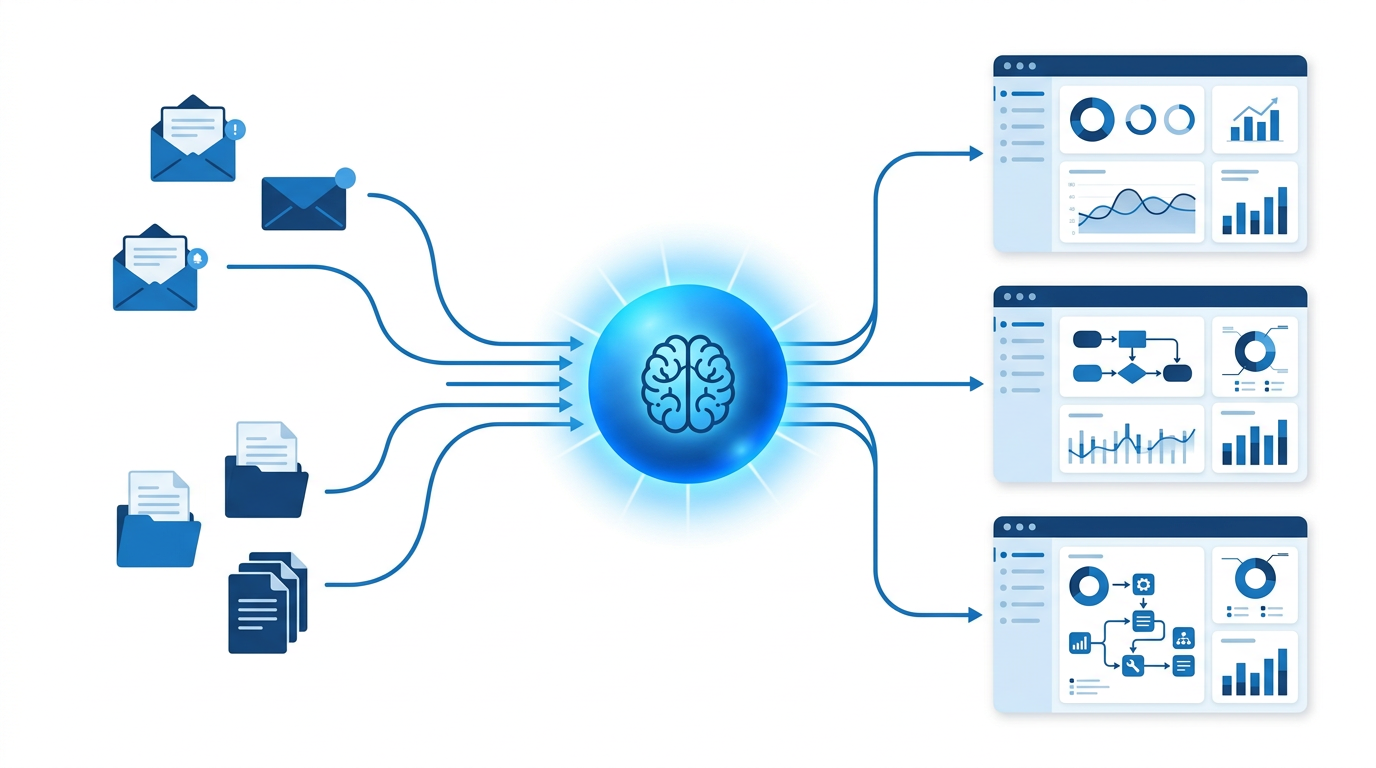
Regardless of which platform you use, the integration pattern is the same:
```
Business Need → [Buyer24] → Structured Output → [Your Platform] → PO/Contract
```
Buyer24 handles:
- Intake and requirement clarification
- Supplier identification and outreach
- RFQ distribution and follow-up
- Quote extraction and comparison
- Negotiation support
- Award recommendation
Your platform handles:
- Requisition creation and approval
- Purchase order issuance
- Supplier master data management
- Contract storage
- Invoice processing and payment
- Spend reporting and analytics
At the handoff, Buyer24 delivers a structured output (selected supplier, agreed pricing, terms) that a buyer enters into the procurement platform, and the platform takes over from there.
SAP Ariba + Buyer24
Where Ariba Excels
SAP Ariba is one of the largest procurement networks in the world. Based on SAP's public documentation, its main strengths are:
- Supplier network. Millions of suppliers on the Ariba Network, with pre-validated profiles and transaction history.
- Procure-to-pay. Requisition → approval → PO → receipt → invoice matching is deeply integrated with SAP ERP. This sequence is the core of any procure-to-pay (P2P) process.
- Contract management. Centralized contract repository with compliance monitoring.
- Spend visibility. Cross-category spend analytics tied to your general ledger.
Where the Gap Is
Ariba's sourcing module (SAP Ariba Sourcing) is powerful but heavy. Creating a sourcing project involves:
- Defining the event type and rules
- Building the RFx document with sections and questions
- Inviting suppliers from the network or manually adding them
- Managing the bidding period
- Running evaluation scenarios
This rigor is appropriate for a $500K category strategy and disproportionate for a $20K one-off purchase. Most buyers skip Ariba Sourcing entirely for sub-threshold purchases and handle them over email.
That email-based sourcing work is invisible to Ariba. It doesn't appear in spend analytics (until the PO is created), it isn't auditable, and it doesn't benefit from competitive quoting.
How Buyer24 Fills It
Illustrative scenario: Your engineering team needs a specialized coating service provider. Estimated spend is $25K, which is below your formal sourcing threshold.
- In Buyer24: The engineer submits the request. Buyer24 clarifies specifications (substrate material, coating type, batch size, turnaround requirements) through a conversational interface.
- In Buyer24: AI identifies 5 potential suppliers: 2 from your Ariba supplier records that have relevant commodity codes and 3 new suppliers from research. The buyer reviews and approves the list.
- In Buyer24: RFQ emails go out with full specifications. Buyer24 tracks responses, sends follow-ups, and collects quotes over 5 business days. When suppliers span multiple countries, automatic email translation for suppliers keeps that outreach in each vendor's language without extra work for the buyer.
- In Buyer24: All quotes are extracted, normalized, and presented in a comparison view. The buyer reviews, discusses with the engineer, and selects a supplier.
- In Ariba: The buyer creates a requisition in Ariba with the selected supplier and agreed pricing. The standard approval workflow runs and the PO is issued.
Result: The engineer got competitive quotes in a week instead of a month. The spend is properly captured in Ariba's analytics. The buyer spent 30 minutes instead of 5 hours, and the entire sourcing process is documented and auditable.
For Ariba Users: What Stays in Ariba
| Always in Ariba | In Buyer24 |
|---|---|
| Supplier master records | Pre-sourcing supplier research |
| Requisitions and approvals | Requirement clarification |
| Purchase orders | RFQ distribution and tracking |
| Contracts | Quote extraction and comparison |
| Invoices and payments | Negotiation communication |
| Spend reporting | Award recommendations |
Coupa + Buyer24
Where Coupa Excels
Based on Coupa's public documentation, its strengths are spend management and user experience:
- Spend visibility. Real-time dashboards showing spend by category, supplier, department, and cost center.
- Approval workflows. Configurable, multi-level approval chains that enforce compliance.
- User adoption. Coupa's consumer-grade UI drives higher adoption rates than most enterprise procurement tools.
- Supplier portal. Suppliers can manage their own profiles, view POs, and submit invoices through a self-service portal.
Where the Gap Is
Coupa's Sourcing Optimization module handles formal sourcing events well, but like Ariba it's designed for structured, planned sourcing. The workflow assumes you know:
- What you need (detailed specifications)
- Who can supply it (identified suppliers)
- How to evaluate it (defined criteria and weights)
For mature categories with established suppliers, this works. For new requirements, ad-hoc purchases, and emerging categories, buyers need to figure all of this out before they can create a sourcing event in Coupa. Buyer24 handles that preparation work.
How Buyer24 Fills It
Illustrative scenario: Marketing needs an event management agency for a product launch. The budget is $40K. This is a new category for your organization, which has never formally sourced event management.
- In Buyer24: The marketing director submits the request. Buyer24 asks structured questions: event type, expected attendance, location, dates, required services (venue sourcing, catering, AV, promotion), and budget range.
- In Buyer24: AI researches event management agencies that match the criteria. Buyer reviews a shortlist of 6 agencies.
- In Buyer24: Customized RFQ emails are sent to all 6, with consistent scope descriptions but personalized based on each agency's known specialties. Responses arrive over the next week.
- In Buyer24: Proposals (a mix of PDFs and email responses) are extracted and compared across pricing, included services, experience, and availability.
- In Coupa: The buyer creates a requisition for the selected agency at the agreed price. Coupa's approval workflow routes it through marketing's budget holder and procurement leadership. Once approved, the PO is issued through Coupa.
Result: Marketing got a competitive selection in 2 weeks instead of 6. The spend goes through Coupa's approval workflow (compliance maintained). Procurement now also has supplier data and pricing for "event management" as a category, which will be useful for future requests.
For Coupa Users: What Changes
Before Buyer24: Stakeholder emails a buyer → buyer manually sources → enters results into Coupa → 3-6 weeks
After Buyer24: Stakeholder submits request in Buyer24 → AI-assisted sourcing → buyer enters results into Coupa → 1-2 weeks
Coupa's workflow doesn't change. The inputs arrive faster and better structured, with competitive pricing attached.
Oracle Procurement Cloud + Buyer24
Where Oracle Excels
Based on Oracle's public documentation, Oracle Procurement Cloud is deeply integrated with Oracle's ERP suite:
- Transactional scale. Handles high-volume, high-frequency purchasing across global operations.
- ERP integration. Native connection to Oracle Financials, Inventory, and Manufacturing.
- Supplier qualification. Detailed supplier onboarding and qualification workflows.
- Self-service procurement. Internal catalogs and punch-out to approved supplier sites.
Where the Gap Is
Oracle Procurement Cloud is optimized for repeatability, meaning reordering known items from qualified suppliers at negotiated prices. The platform is exceptionally efficient when the supplier relationship is established and the product/service is cataloged.
Where it's less helpful:
- New supplier identification. Oracle doesn't discover new suppliers for you. If you need a vendor for a service or material that isn't in your system, you have to find one yourself.
- Informal quoting. Oracle's sourcing module (Oracle Sourcing Cloud) handles formal RFx events, but day-to-day quoting, such as "can you send me a price for this?", happens over email.
- Quote normalization. When suppliers respond to informal requests in different formats, Oracle doesn't help you compare them, so the comparison ends up in a spreadsheet.
How Buyer24 Fills It
Illustrative scenario: Your manufacturing facility needs a new precision machining supplier. Current supplier has quality issues. Estimated annual spend: $150K across multiple part numbers.
- In Buyer24: The quality manager and buyer jointly submit a request. Buyer24 structures the requirements: part specifications, tolerances, materials, annual volumes, delivery frequency, and quality certifications required (AS9100, ISO 9001).
- In Buyer24: AI identifies 8 potential machining shops that match the capability requirements. Buyer narrows to 5 based on location preferences and prior experience.
- In Buyer24: Detailed RFQ packages go out to all 5, including drawings and specifications. Buyer24 tracks which suppliers open the RFQ, which ask questions (and routes questions to the buyer), and which submit quotes.
- In Buyer24: Quotes, submitted as PDFs with line-item pricing for each part number, are extracted and normalized into a side-by-side comparison. The buyer can see price per part, tooling charges, lead times, and minimum order quantities across all 5 suppliers.
- In Oracle: After selecting a supplier and negotiating final terms, the buyer onboards the new supplier through Oracle's qualification workflow. Blanket PO is created in Oracle against the negotiated pricing. The manufacturing team can now release orders against the blanket PO.
Result: A new qualified supplier is onboarded in Oracle in 4 weeks instead of 3 months. The sourcing rationale is documented, and the buyer has a benchmark comparison to reference during future negotiations.
FAQ
"Does Buyer24 integrate directly with our platform via API?"
Buyer24 is designed as a workflow layer rather than a system integration. Today, the handoff is buyer-mediated: the buyer reviews the Buyer24 output and enters the relevant data into their procurement platform. This is intentional, because it keeps the human in the loop and avoids the complexity and security considerations of direct system-to-system integration.
Direct API integrations are on our roadmap for organizations that want automated handoff after human approval.
"Can we use our existing supplier data in Buyer24?"
Yes. Buyer24 can import your supplier lists so that AI-powered sourcing considers your existing, approved suppliers first before suggesting new ones. This respects the work you've already done to qualify and onboard vendors.
"Does this replace our platform's sourcing module?"
No. For large, strategic sourcing events, such as $500K+ categories, multi-round negotiations, and complex evaluation scenarios, your platform's sourcing module is the right tool. Buyer24 is for everything below that threshold: the many sourcing requests that are too small for a formal event but too important to handle ad hoc.
"What about Workday, Ivalua, Basware, or Zycus?"
The pattern is the same. Buyer24 handles pre-procurement sourcing work and delivers structured outputs to any procurement platform. If your system accepts a requisition with a supplier and a price, Buyer24 can prepare that data. This is how any modern e-procurement stack benefits from an AI sourcing layer in front of it.
Which Tool Handles Each Phase
Buyer24 and your procurement platform serve different phases of the procurement lifecycle.
| Phase | Tool | Why |
|---|---|---|
| Need identification | Buyer24 | Unstructured, requires AI interpretation |
| Supplier sourcing | Buyer24 | Manual, email-based, time-consuming |
| Competitive quoting | Buyer24 | Format-agnostic, requires extraction |
| Negotiation | Buyer24 + Buyer | Communication-heavy, benefits from AI preparation |
| Requisition & approval | Your platform | Structured, policy-driven, audit-critical |
| PO & contract | Your platform | Transactional, ERP-integrated |
| Payment & reporting | Your platform | Financial, compliance-critical |
Because the two tools cover different phases, there is no overlap and no migration, and the path from business need to purchase order gets shorter.
This is the fourth post in our series on AI in procurement. Previously: How AI Finally Solves the Tail Spend Problem. Next up: From Request to Award: How AI Automates the Pre-Procurement Workflow, a step-by-step look at the full sourcing workflow.
Want to see Buyer24 working alongside your specific platform? Request a demo and we'll show you the integration pattern for your stack.