
ai procurement layer Series — Part 2 of 6
- 1The AI Layer Your Procurement Stack Is Missing
- 25 Risks of AI in Procurement (And How to Eliminate Each One)
- 3How AI Finally Solves the Tail Spend Problem
- 4Buyer24 Alongside SAP Ariba, Coupa, and Oracle
- 5From Request to Award: How AI Automates the Pre-Procurement Workflow
- 6How to Introduce AI to Your Procurement Team Without the Guesswork
Legacy procurement vendors have added "AI-powered" to their marketing pages, and conference keynotes promise transformation. Procurement leaders are asking a more practical question: what could go wrong? For the full picture of what the technology does and where it fits, see our complete guide to AI in procurement. A short answer version is in the risks of AI in procurement.
AI in procurement carries real risks that are specific to the domain and different from the generic AI concerns you read about in the news. Understanding them matters because of how much AI improves procurement when the guardrails are right, and it is the first step toward eliminating them.
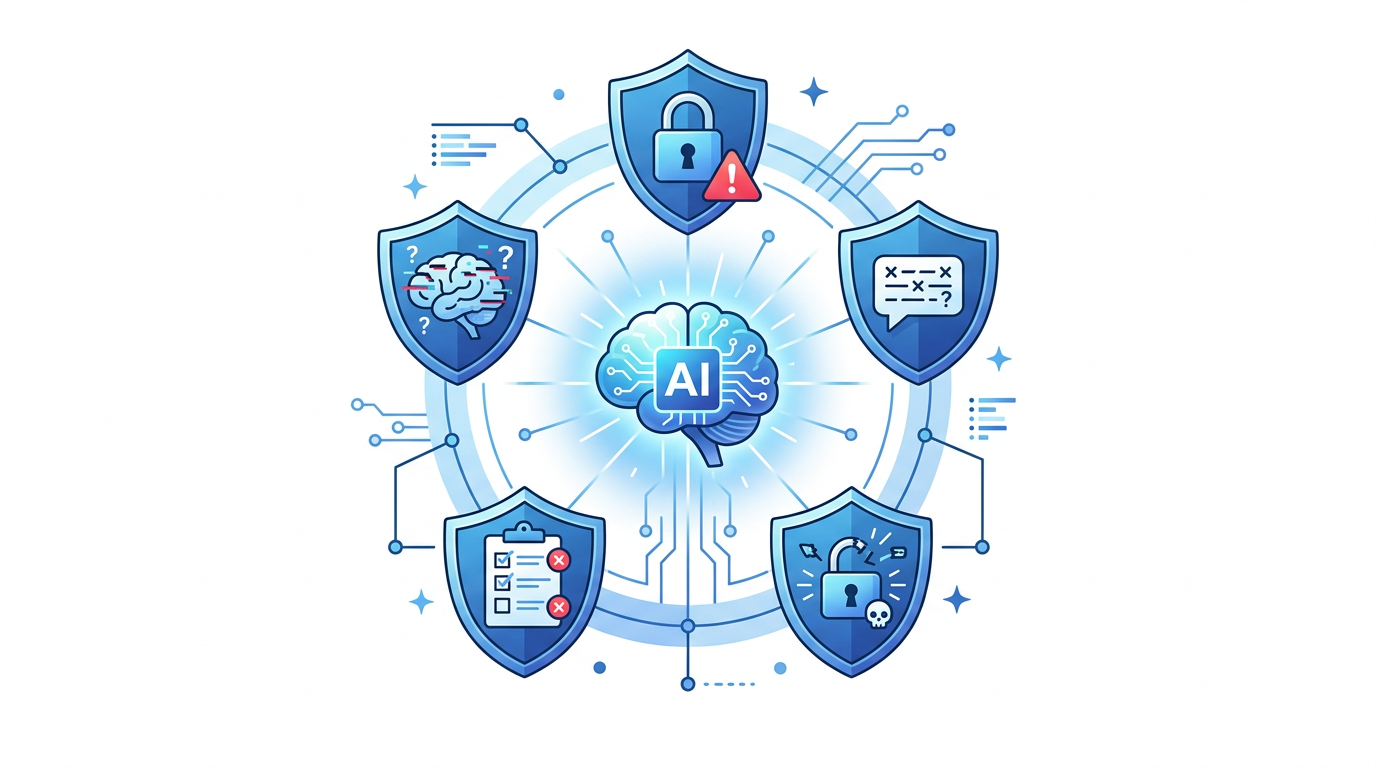
This guide covers the five risks that matter most and how to address each one.
Risk 1: Hallucinated Supplier Data
The Problem
Large language models can generate information that sounds authoritative but is completely fabricated. A hallucinated fact is an inconvenience in general conversation and a liability in procurement. The underlying issue is often data quality: 74% of procurement leaders say their data isn't AI-ready (Gartner, 2025), which makes the "garbage in" problem a real driver of unreliable AI output. For what "AI-ready" actually means and the order of work behind it, see our guide to procurement data readiness.
Imagine an AI tool that "recommends" a supplier with a fabricated capability, such as ISO 13485 certification for medical device manufacturing. Your team makes sourcing decisions based on that recommendation and issues a PO. Three months later, during an audit, you discover the supplier never held that certification. The parts don't meet spec, and regulatory consequences follow.
Pricing carries the same risk. Suppose an AI estimates that a component should cost $2.40/unit based on "market data" it generated rather than extracted. Your buyer uses that as a benchmark, accepts a quote at $2.50, and considers it a good deal. As an illustrative example, if the actual market rate was $1.80, you would have overpaid by roughly 39% because your benchmark was fiction.
The Fix: Extract, Don't Generate
Better prompts will not solve this, because the fix is architectural. AI in procurement should extract and structure data from real documents rather than generate data from its training set.
When Buyer24 presents a quote comparison, every price, lead time, and specification traces back to an actual document submitted by an actual supplier. The AI reads, parses, and organizes the documents and does not invent data.
For supplier discovery, this means surfacing real companies from verified sources rather than generating descriptions of what a supplier "might" offer. For benchmarking, it means comparing actual quotes received rather than estimated market rates.
The principle: If a number or fact appears in a procurement decision, it should have a traceable source. AI should make that tracing easier, not eliminate it.
Risk 2: Unauthorized Supplier Communication
The Problem
Procurement communication carries legal and commercial weight. An email to a supplier can constitute a binding commitment, reveal negotiation strategy, or create obligations your organization didn't intend.
When AI drafts and sends supplier communications, the risk surface expands dramatically:
- Incorrect terms. The AI rephrases a counter-offer and inadvertently changes the meaning. "We'd consider $4.20 for volumes above 10,000" becomes "We agree to $4.20 for orders above 10,000."
- Wrong recipients. The AI contacts a blacklisted supplier, a competitor's subsidiary, or a vendor your legal team has flagged for compliance issues.
- Information leakage. The AI includes competitive pricing from another supplier's quote in a negotiation email, violating confidentiality that was implied (or explicit) in the original submission.
- Tone and relationship damage. A supplier relationship built over years of careful communication can be damaged by a single AI-generated email that comes across as impersonal, aggressive, or tone-deaf.
The Fix: Human-in-the-Loop at Every External Touchpoint
Every message that leaves your organization and reaches a supplier must be reviewed and approved by a human before sending, without exception. The general rule for placing those gates, by reversibility rather than by job title, is covered in our guide to agentic AI in procurement.
This does not defeat the purpose of automation. Writing an email from scratch takes 15–30 minutes of thinking about what to say, looking up previous context, drafting, and editing. Reviewing a well-drafted email takes 30 seconds to scan it, confirm it says what you want, and send it.
Buyer24 drafts emails with full context (previous correspondence, quote details, negotiation history) and presents them for buyer approval. The AI eliminates the tedious drafting work, and the human makes sure nothing inappropriate goes out.
The principle: AI prepares the message and a human approves it. Every external communication has a named person who reviewed it.
Risk 3: The Accountability Gap
The Problem
When a human buyer makes a bad sourcing decision, there's a clear chain of accountability. They evaluated the options, made a judgment call, and can explain their reasoning. The organization can learn from the mistake and adjust.
When AI is involved in that decision, accountability gets murky:
- "The AI recommended this supplier." Who validated the recommendation?
- "The comparison showed this was the best price." Who verified the data extraction was accurate?
- "The system sent the RFQ to these five suppliers." Who approved the supplier list?
In regulated industries such as healthcare, government, defense, and financial services, procurement decisions must be auditable. "The AI did it" is not an acceptable answer to an auditor, a regulator, or a litigation attorney.
The Fix: Decision Auditability by Design
Every AI-assisted procurement action should produce a clear audit trail that answers three questions:
- What did the AI do? (Extracted data, drafted an email, generated a comparison)
- What did the human decide? (Approved, modified, or rejected the AI's output)
- What was the basis? (Source documents, supplier responses, evaluation criteria)
Buyer24 keeps an audit trail for every RFQ, so requests, supplier replies and approvals can be traced afterwards. When an auditor asks "why was this supplier selected?", the answer is a complete trail from initial request through quote comparison to the buyer's documented decision.
The principle: AI informs decisions and humans own them. The system makes it easy to prove who decided what and why. Because accountability stays with people, the buyer's role changes rather than disappears as AI takes on more of the workflow.
Risk 4: Data Security and Leakage
The Problem
Procurement data is among the most commercially sensitive in any organization:
- Supplier pricing reveals what your vendors are willing to accept, which is a competitive advantage in future negotiations.
- Contract terms contain obligations, penalties, and service levels that competitors would love to see.
- Internal budgets signal how much you're willing to pay, which undermines your negotiating position if leaked.
- Negotiation strategies, such as planned counter-offers, walk-away prices, and alternative suppliers, are only effective if they're confidential.
- Supplier relationships (who you work with, what you buy, at what volumes) can reveal business strategy.
Feeding this data into a generic AI model raises serious questions. Where is it processed? Is it stored? Is it used to train models that serve other customers, potentially including your competitors? Can an API call return data from another customer's procurement activity?
These are standard due diligence questions that any responsible procurement leader should ask.
The Fix: Isolated, Purpose-Built Infrastructure
AI for procurement should operate in an environment where:
- Customer data is isolated. Your procurement data is never mixed with another customer's data, used for model training, or accessible outside your account.
- Processing is contained. Documents are processed, data is extracted, and results are delivered. Source documents aren't retained beyond what's needed for the workflow.
- Access controls exist. Not every user should see every supplier's pricing. The AI layer should respect the same permission structure as your procurement platform.
- Compliance is demonstrable. Standard enterprise security requirements, such as SOC 2, data residency, and encryption at rest and in transit, should be met rather than waved away.
The principle: Treat procurement AI infrastructure with the same security rigor as your financial systems, because it holds data of similar sensitivity.
Risk 5: Integration Disruption
The Problem
Most AI procurement solutions want to replace your current platform. They ask you to migrate data, retrain users, and abandon workflows you've spent years building.
The main risks are:
- Migration failures. Data that seemed structured in your old system turns out to have edge cases, custom fields, and undocumented dependencies that don't map cleanly.
- User resistance. Procurement teams that were productive with the old tool now struggle with new interfaces, new terminology, and new processes. Productivity drops for months during the transition.
- Integration breakdowns. Your ERP, accounting system, supplier portal, and approval workflows were all integrated with the old platform. Each integration needs to be rebuilt.
- Vendor lock-in. Once you've migrated, switching again is even more painful. You're committed to the new vendor's roadmap, pricing, and strategic direction.
For many organizations, the risk of a platform migration exceeds the expected benefit of AI capabilities. So they do nothing, and the procurement gap persists.
The Fix: Layer Architecture, Not Replacement
The architectural decision that eliminates integration risk is not replacing the system of record.
Buyer24 operates as a layer in front of your existing procurement platform. It handles the unstructured pre-procurement workflow and delivers structured outputs to your existing system, as described in how Buyer24 fits with existing ERP and procurement tools. Your SAP Ariba, Coupa, or Oracle instance stays exactly where it is, doing exactly what it does.
This means:
- Zero data migration. Your procurement platform's data stays in your procurement platform.
- No user retraining on core workflows. Buyers still approve POs, manage suppliers, and run reports in the same system they know.
- Existing integrations untouched. Your ERP, accounting, and approval integrations don't change.
- Incremental adoption. Start with one use case, one team, one category. Expand only when you see results.
The principle: Add AI capability without disrupting the systems you already run. Teams are more likely to use an AI tool that doesn't force them to change everything else.
The Meta-Risk: Doing Nothing
The last risk is inaction.
While your team debates AI strategy, your competitors are automating their sourcing workflows and capturing the ROI companies can expect from AI in procurement. Some organizations already complete in minutes the quote comparisons your buyers spend hours on, and return sourcing results in days where your stakeholders wait weeks.
The procurement gap will widen as supplier networks grow more complex, request volumes increase, and speed expectations rise.
The practical choice is between adopting AI in procurement now, with the right guardrails, and adopting it hastily later, without them, when you are forced to.
Questions to Ask Any Procurement AI Vendor
These questions apply to Buyer24 and to any other solution.
| Question | What to Look For |
|---|---|
| Can data be traced to source documents? | Extraction-based, not generation-based |
| Who approves external communications? | Human-in-the-loop for all supplier-facing messages |
| Is every decision auditable? | Timestamped logs with user attribution |
| Where is data processed and stored? | Isolated tenant, no cross-customer training |
| Does it require platform migration? | Layer architecture, not replacement |
If the answer to any of these is unclear, keep asking until the vendor gives a clear answer.
FAQ
What are the main risks of using AI in procurement?
The five risks that matter most are hallucinated supplier data, unauthorized supplier communication, the accountability gap, data security and leakage, and integration disruption. Each is specific to procurement rather than a generic AI concern, and each can be eliminated with the right architectural and process guardrails.
How do you prevent AI from hallucinating supplier data?
The fix is architectural. AI should extract and structure data from real documents rather than generate it from training data. Every price, lead time, and specification should trace back to an actual document submitted by an actual supplier. For supplier discovery, that means surfacing real companies from verified sources, and for benchmarking it means comparing actual quotes received rather than estimated market rates.
Is it safe to let AI send emails to suppliers?
Only with a human in the loop at every external touchpoint. Procurement communication can constitute binding commitments, leak competitive information, or damage relationships, so every message that reaches a supplier should be reviewed and approved by a named person before sending. AI drafts the email with full context; reviewing a well-drafted message takes about 30 seconds versus 15–30 minutes to write one from scratch.
Who is accountable when AI is involved in a sourcing decision?
The human is. AI augments decisions while humans own them, which requires decision auditability by design. Every AI-assisted action should log what the AI did, what the human decided (approved, modified, or rejected), and the basis for that decision, with timestamps and user attribution, so there is a complete trail from request through quote comparison to the documented decision.
How is sensitive procurement data protected when using AI?
Procurement AI should run on isolated, purpose-built infrastructure. Customer data should never be mixed with other customers' data or used for model training, processing should be contained without retaining source documents beyond the workflow, access controls should respect existing permissions, and standard enterprise compliance (SOC 2, encryption, data residency) should be demonstrable rather than waved away.
Do I have to replace SAP Ariba, Coupa, or Oracle to use AI in procurement?
No. A layer architecture eliminates integration risk by keeping your system of record in place. The AI handles the unstructured pre-procurement workflow and delivers structured outputs to your existing platform, which means zero data migration, no retraining on core workflows, untouched existing integrations, and incremental adoption one use case at a time.
How do I evaluate whether a procurement AI tool is safe?
Ask five questions: Can data be traced to source documents? Who approves external communications? Is every decision auditable? Where is data processed and stored? Does it require platform migration? Look for extraction-based data, human-in-the-loop for all supplier-facing messages, timestamped logs with user attribution, an isolated tenant with no cross-customer training, and a layer architecture rather than replacement.
This is the second post in our series on AI in procurement. Previously: The AI Layer Your Procurement Stack Is Missing. Next: How AI Finally Solves the Tail Spend Problem, which covers where the ROI of AI procurement is highest.
Want to see how Buyer24 handles these risks in practice? Request a demo and we'll walk through the guardrails with your real use cases.