
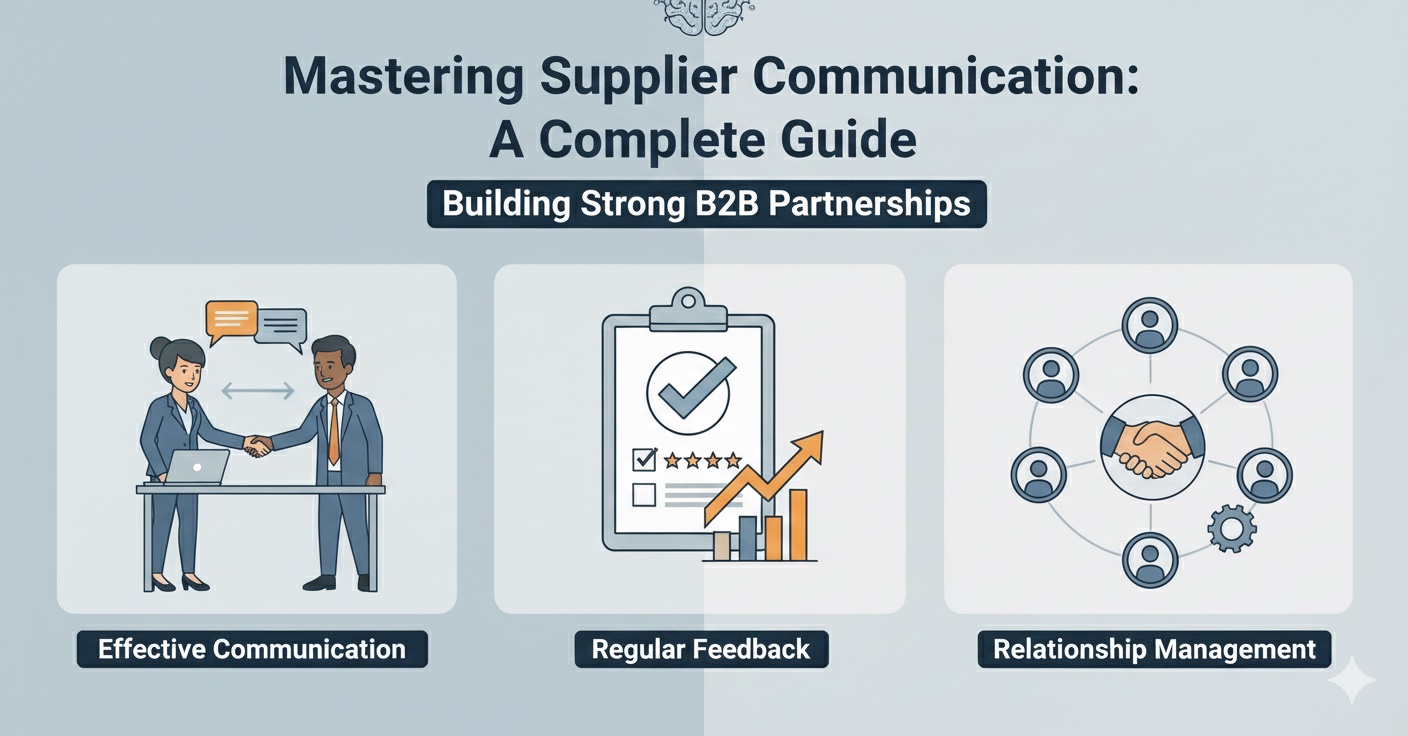
The Role of Supplier Communication in Procurement
Effective supplier communication is the foundation of successful procurement. With supply chain disruptions, rising costs, and increasing complexity, the quality of your supplier relationships has a large effect on your organization's performance.
Yet many procurement teams still treat supplier interactions as transactional exchanges rather than strategic conversations, and most can't see those interactions across the team at all, a gap covered in our guide to procurement visibility. In Deloitte's 2025 Global CPO Survey, leaders pointed to enhanced decision-making (67.7%) and productivity (49.4%) as the top sources of value from generative AI in procurement (Art of Procurement, 2025). This guide covers practical ways to improve supplier communication and how tools like Buyer24 can automate and support your supplier interactions.
Treating Suppliers as Partners
The most successful procurement organizations treat their important vendor relationships as partnerships rather than transactions.
Treating suppliers as partners means:
- Working more closely and collaboratively
- Providing regular feedback beyond complaints
- Sharing information that helps them serve you better
- Investing in relationships that deliver mutual success
Unlike basic vendor management that handles day-to-day oversight, strategic supplier relationship management (SRM) focuses on turning important suppliers into strategic allies. These habits matter even more when managing overseas suppliers, where distance and lead-time risk make strong relationships essential. Much of that day-to-day rhythm revolves around quotes, so it pairs naturally with a solid approach to supplier quote management across every request.
Building a Communication Foundation
Establish Structured Channels
Even after thoroughly vetting a supplier, both parties should establish structured communication channels:
- Regular review meetings where you can speak candidly
- Designated contacts for different types of issues
- Clear escalation paths for urgent problems
- Shared platforms for documentation and collaboration
Organizations increasingly use supplier portals as a centralized platform for managing data, processes, and interactions, which simplifies communication and supports stronger partnerships.
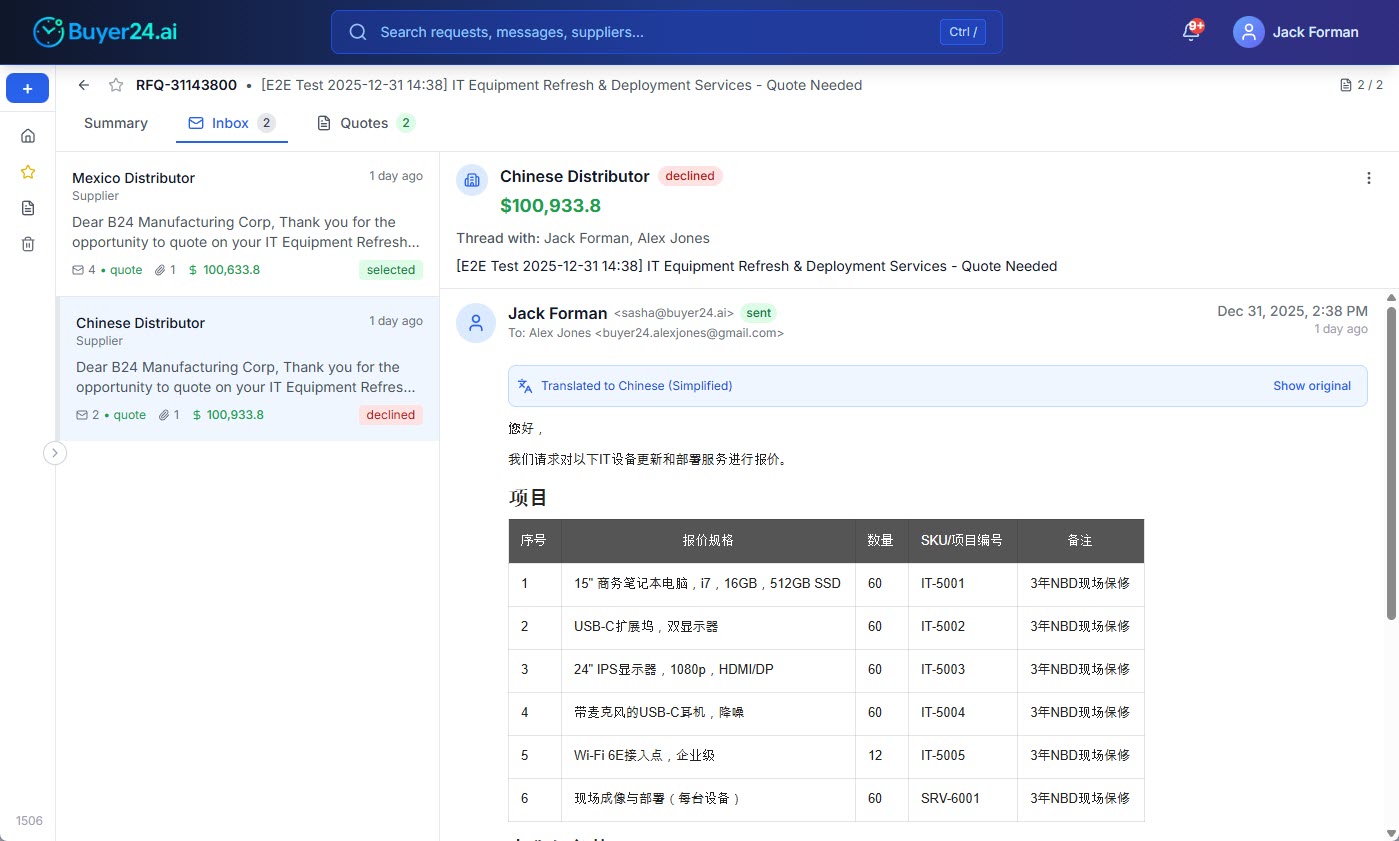
Buyer24 provides this centralized platform for RFQ communication. Each RFQ has an Inbox tab with one thread per supplier, holding its replies, questions and quotes, and the Conversations board shows every live conversation across your RFQs. Instead of hunting through scattered email chains, your team sees each supplier's RFQ conversation in one place.
Set Clear Expectations from Day One
Effective communication starts with onboarding new suppliers. Educate new suppliers on:
- Your organization's expectations and standards
- Policies and procedures they need to follow
- Quality control requirements
- Best practices for working with your team
- Key contacts and communication preferences
Draft vendor guidelines to share with every new supplier. Formalizing these expectations into a supplier communication policy keeps your team consistent. Go through them during onboarding and give suppliers room to ask questions for clarification.
Eight Communication Principles That Build Trust
1. Be Transparent
Engage in open and transparent communication to foster trust. Share information proactively rather than only when problems arise. When suppliers understand your business context, they can serve you better.
2. Communicate Consistently
Stay in contact between orders. Regular touchpoints, even brief ones, maintain the relationship and surface issues before they become problems. Building a rhythm for day-to-day supplier communication keeps these interactions from slipping through the cracks.
3. Be Responsive
When suppliers reach out with questions or concerns, respond promptly. Delayed responses signal that the relationship isn't a priority, and suppliers adjust their service accordingly. The same applies in reverse. Suppliers who track their quote win rate discover that slow replies quietly cost them business too.
Many procurement teams struggle with responsiveness. When supplier emails get buried in crowded inboxes, response times suffer, and slow responses are one of the main reasons RFQs don't get answered on time. Procurement leaders are investing in technology: in a 2025 Gartner survey, 68% of CPOs named AI and generative AI a top technology priority (SCMR). Buyer24 helps by putting live supplier conversations on a Conversations board, where a Needs you column shows which ones are waiting on your team. The B24 Assistant can draft replies, which go out at the automation level you choose, and that helps when you are handling dozens of supplier threads at once.
4. Provide Specific Feedback
Vague feedback doesn't help anyone improve. When there's a problem, be specific about what happened, what the impact was, and what you need going forward. The same applies to positive feedback, so recognize specific behaviors you want to see repeated.
5. Listen Actively
Communication runs both ways, so create space for suppliers to share their perspectives, challenges, and ideas. They often see opportunities or problems you don't.
6. Keep Commitments
If you say you'll send information, make a decision, or place an order, follow through, because broken commitments erode trust.
7. Address Issues Directly
Address concerns promptly and professionally, before they fester, focusing on solutions rather than blame. Early intervention prevents small issues from becoming major disputes.
8. Respect Their Business
Remember that suppliers are running businesses too. Understand their constraints, respect their time, and recognize that they have other customers and priorities.
Breaking Language Barriers in Global Supplier Communication
One of the biggest challenges in modern procurement is communicating with suppliers across different countries and languages. Many procurement teams limit their supplier pool simply because of language barriers, and miss out on competitive pricing and specialized capabilities.
Buyer24's automatic email translation for global supplier communication removes much of this obstacle. RFQs and replies go out in each supplier's language, and their messages, whether in Chinese, German, Spanish or another language, can be shown in yours. A "Don't translate, send as written" toggle sends your exact text.
This means you can:
- Source from suppliers worldwide without language constraints
- Maintain professional communication regardless of native language
- Avoid losing important details in manual translation
- Expand your supplier network to find the best value
Segmenting Your Supplier Communication
Suppliers do not all require the same level of engagement. Segmenting them lets you invest time and resources where they have the greatest impact.
Strategic Suppliers
High-impact suppliers with unique, business-critical products or services deserve:
- Quarterly business reviews
- Executive relationship building
- Joint planning sessions
- Collaborative problem-solving
- Innovation discussions
Preferred Suppliers
Important suppliers who provide significant value warrant:
- Monthly or bi-monthly check-ins
- Regular performance reviews
- Proactive communication about upcoming needs
- Feedback and development discussions
Transactional Suppliers
Suppliers providing commoditized goods or non-critical services need:
- Efficient, professional communication
- Clear requirements and expectations
- Prompt payment and basic relationship management
- Standard processes and minimal customization
Buyer24 can help you keep the tiers straight. You can tag suppliers on their profile (a `preferred` tag puts them under Favorites), and on paid plans RFQ Autopilot handles routine RFQ follow-ups, so more of your own time goes to the suppliers who need personal attention.
Monitoring Performance and Providing Feedback
Regular performance assessment provides the data needed to make informed decisions about contract renewals, renegotiations, or finding alternatives.
Implement a Scorecard System
Create a scorecard to rank vendor performance and identify top performers. If you want a deeper framework for measuring supplier reliability, it's worth understanding the metrics behind each score. Common metrics include:
- On-time delivery rates
- Quality acceptance rates
- Price competitiveness
- Responsiveness to inquiries
- Problem resolution effectiveness
- Innovation and value-add contributions
Track Quote History and Response Patterns
Understanding how suppliers respond to your RFQs over time reveals patterns that inform your sourcing strategy. Knowing how to track communication history with suppliers and following proven best practices for managing RFQs efficiently keep your sourcing process consistent. Buyer24 keeps each quote you receive on the supplier's profile, and each supplier's Performance tab shows its win rate and how fast it quotes across your RFQs.
This historical data helps you:
- Identify your most responsive and competitive suppliers
- Compare a supplier's past quotes, which stay on its profile
- Recognize suppliers who consistently meet your needs
- Make data-driven decisions about preferred vendor status
Conduct Regular Reviews
Schedule periodic performance reviews to:
- Share scorecard results
- Discuss areas for improvement
- Recognize strong performance
- Align on future priorities
- Address any concerns
Make Feedback Actionable
Go beyond reporting scores and discuss what the numbers mean and what actions will improve them. Good suppliers want to improve and need this information to do it.
Managing Risk Through Communication
Transparent communication helps you identify potential risks before they impact your customers.
Early Warning Systems
Work with suppliers to establish early warning indicators for:
- Supply shortages or capacity constraints
- Regulatory or compliance issues
- Financial difficulties
- Quality problems
- Delivery delays
Collaborative Risk Planning
Partner with strategic suppliers to develop contingency plans. When both parties understand the risks and have agreed on responses, disruptions become manageable rather than catastrophic.
Regular Risk Discussions
Include risk updates in your regular supplier communications. Ask about challenges they're seeing, industry trends, and potential concerns. This proactive approach surfaces issues when there's still time to address them.
How Buyer24 Supports Supplier Communication
Buyer24 (buyer24.ai) is an AI sourcing platform that handles the RFQ side of supplier communication: it sends RFQs by email and keeps each supplier's replies, questions and quotes on one thread per RFQ, whether the supplier answers by email or through a free supplier portal. Suppliers need no Buyer24 account, and in the portal they see only their own thread.
- Translation: RFQs and replies go out in each supplier's language, and their messages can be shown in yours. A "Don't translate, send as written" toggle sends your exact text.
- Follow-ups: on paid plans, RFQ Autopilot answers routine supplier questions from the RFQ and your guidelines, reminds suppliers who have not replied, and escalates anything ambiguous or commercial to you.
- Quotes: prices, lead times and terms are extracted from supplier emails and attachments into a side-by-side comparison.
Your first 3 RFQs are free, with no credit card. Request a demo.
Benefits of Strong Supplier Communication
Organizations with strong supplier communication practices see tangible benefits:
- Faster adaptation to change: Strong relationships allow quick adjustments when circumstances shift
- Better performance: Suppliers who understand your needs serve you better
- More savings opportunities: Partners share ideas for cost reduction
- Increased efficiency: Clear communication eliminates waste and rework
- Supplier-led innovation: Engaged suppliers bring you new ideas and capabilities
- Risk reduction: Early warning and collaborative planning minimize disruptions
- Longer-lasting relationships: Trust and mutual success create stability
Getting Started
Improving supplier communication doesn't require a large initiative. Start with these steps:
- Identify your most strategic suppliers and assess current communication quality
- Establish regular touchpoints even if they're brief
- Create clear expectations and share them proactively
- Implement basic performance tracking and share feedback
- Listen more and ask suppliers what would help them serve you better
- Consider tools like Buyer24 that centralize and enhance your supplier interactions
FAQ
What is the difference between vendor management and supplier relationship management?
Vendor management handles day-to-day oversight: orders, deliveries, and basic issue resolution. Supplier relationship management (SRM) goes further, turning important suppliers into strategic allies through joint planning, feedback, and collaboration. The most successful teams treat key vendor relationships as partnerships rather than one-off transactions.
How should I segment my suppliers for communication?
Use three tiers. Strategic suppliers get quarterly reviews, executive engagement, and joint planning. Preferred suppliers warrant monthly check-ins and performance reviews. Transactional suppliers need efficient, consistent, standardized communication. Segmenting ensures you invest time where it delivers the greatest impact instead of treating every vendor the same.
How can I communicate with suppliers who speak different languages?
Automatic email translation removes the language barrier. Incoming messages translate into your preferred language, and your replies translate back into the supplier's language. This lets you source from qualified suppliers worldwide without losing details to manual translation or limiting your pool to local vendors.
What metrics belong on a supplier scorecard?
Common metrics include on-time delivery rates, quality acceptance rates, price competitiveness, responsiveness, problem-resolution effectiveness, and value-add contributions. Track these consistently and review them with suppliers. Gartner notes 74% of procurement leaders say their data isn't AI-ready (Gartner, 2025), so clean scorecard data also strengthens future analytics.
How often should I communicate with suppliers?
It depends on the supplier's tier. Strategic suppliers benefit from quarterly business reviews, preferred suppliers from monthly or bi-monthly check-ins, and transactional suppliers from efficient communication as needs arise. Above all, be consistent and stay in contact between orders, since regular touchpoints surface issues before they become problems.
Ready to Transform Your Supplier Communication?
See how Buyer24 can help you build stronger supplier relationships with centralized communication, automatic translation, and intelligent quote tracking.